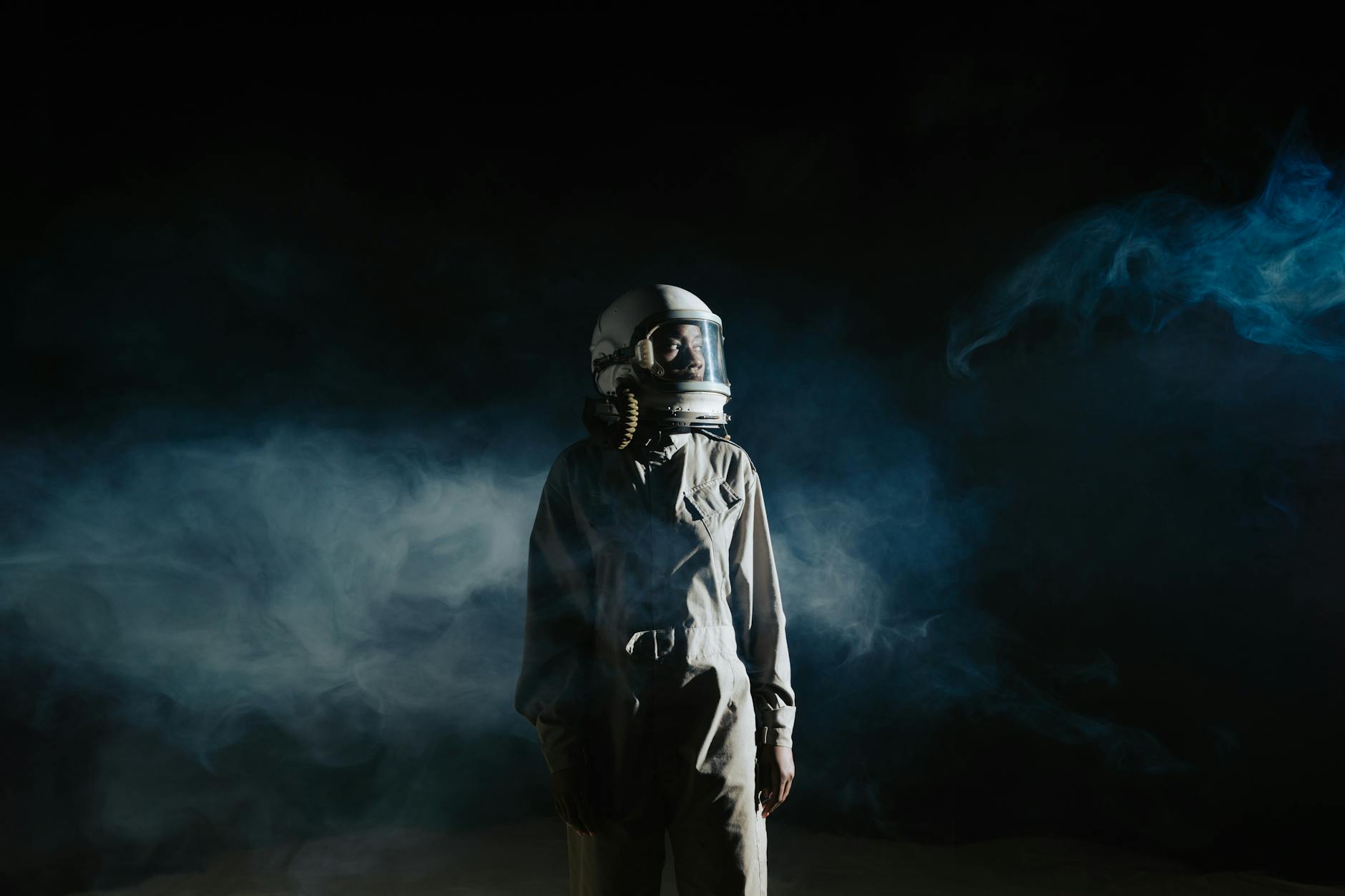
Three Space Travelers Return Home: NASA Astronaut and Two Russian Cosmonauts Conclude Eight-Month ISS Mission
Introduction
After spending more than eight months aboard the International Space Station (ISS), a three-member crew — one NASA astronaut and two Russian cosmonauts — safely returned to Earth on December 9, 2025. Their landing marked the end of a mission focused on scientific experimentation, international collaboration, and maintaining humanity’s continuous presence in orbit.
The spacecraft Soyuz MS-27 carried NASA astronaut Jonny Kim and Roscosmos cosmonauts Sergey Ryzhikov and Alexei Zubritsky back from orbit, touching down near Zhezkazgan, Kazakhstan. Their return represents another milestone in the decades-long partnership between the United States and Russia in space exploration, even amid complex geopolitical realities.
This article explores their mission, the challenges faced aboard the ISS, the scientific contributions they made, and the broader implications of their safe return for future human spaceflight.
The Journey from Orbit to Earth
The return of the Soyuz MS-27 spacecraft concluded a mission that began in early 2025, when the crew launched from the Baikonur Cosmodrome in Kazakhstan. During their tenure aboard the ISS, they orbited Earth more than 3,400 times, traveling nearly 90 million miles while conducting experiments designed to improve life both on Earth and in space.
The descent phase of the journey followed standard procedure — a three-and-a-half-hour trip from undocking to touchdown. After separating from the station, the capsule performed a deorbit burn, re-entered the atmosphere protected by its heat shield, and parachuted safely onto the Kazakh steppe. Recovery teams quickly arrived at the landing site to assist the crew, who were extracted in good health.
NASA confirmed that all three members were “in excellent condition” after medical checks and would begin standard post-flight rehabilitation to readapt to Earth’s gravity.
Life and Work Aboard the International Space Station
During their eight months on the ISS, the crew took part in more than 200 scientific investigations across fields including biology, physics, human physiology, and materials science.
Among the highlights:
- Human health research, studying how microgravity affects bone density and cardiovascular function.
- Agricultural experiments, testing plant growth under limited resources to support future long-duration missions.
- Fluid dynamics and materials tests, aiding the development of lighter and more efficient manufacturing processes.
They also performed essential station maintenance and upgrades, including the replacement of key hardware and system components that ensure the ISS remains fully operational.
NASA’s Jonny Kim — a decorated Navy SEAL, physician, and astronaut — served as flight engineer, contributing to both operational tasks and medical monitoring studies designed to inform long-term space habitation plans.
International Cooperation in Orbit
Despite global political tensions, the ISS remains one of the most remarkable examples of peaceful international collaboration. The station’s operations rely on cooperation between NASA, Roscosmos, the European Space Agency (ESA), Japan’s JAXA, and the Canadian Space Agency (CSA).
Throughout this mission, American and Russian crew members continued to work side by side — sharing duties, research goals, and daily routines. Their success reinforces the message that scientific progress can transcend geopolitical barriers when driven by a shared human purpose: exploration.
This ongoing partnership continues to lay the groundwork for future joint missions and data sharing that will benefit programs such as NASA’s Artemis program and Russia’s next-generation Orbital Service Station.
The Science Behind Re-entry and Recovery
Re-entry into Earth’s atmosphere is one of the most technically demanding phases of any mission. As the Soyuz capsule re-enters, friction with the atmosphere generates temperatures exceeding 1,600 °C (2,900 °F). Its heat shield must absorb and dissipate that energy while keeping the interior cool enough for the crew.
Once the capsule slows through atmospheric drag, a sequence of parachutes deploys to further reduce descent speed before landing. After touchdown, search-and-rescue teams move swiftly to stabilize the spacecraft and assist the astronauts.
Within minutes of landing, Jonny Kim, Sergey Ryzhikov, and Alexei Zubritsky were extracted, smiling, and greeted by mission officials. From there, they were flown to a nearby recovery facility for initial medical evaluation, then onward to their respective home agencies.
What the Mission Achieved
The mission achieved several crucial objectives:
- Advancement of Microgravity Research
The experiments conducted onboard will help scientists better understand human adaptation to space — knowledge vital for upcoming lunar and Martian expeditions. - Maintenance of the Station’s Core Systems
The crew helped install new components to support the ISS’s solar arrays and environmental systems, ensuring continued station reliability. - Technological Demonstrations for Future Missions
Testing advanced computing and sensor systems provided insight into how autonomous technologies might operate in deep-space conditions. - Strengthening of Global Partnerships
The success of this mission demonstrates how shared goals in science and exploration can foster cooperation even during times of terrestrial division.
Preparing for Future Exploration
Each mission aboard the ISS serves as a stepping stone toward more ambitious objectives. Lessons from this eight-month stay will contribute to NASA’s Artemis program, which aims to establish a sustained human presence on the Moon before venturing to Mars.
Data from the crew’s medical studies will be analyzed to improve countermeasures for long-term space exposure — from muscle loss and radiation effects to psychological resilience. Meanwhile, Roscosmos continues to refine its plans for a new Russian Orbital Service Station, intended to succeed the ISS after 2030.
As humanity looks outward, missions like these serve as vital testbeds for the systems, teamwork, and endurance that interplanetary travel will demand.
Challenges and Triumphs
Space missions are never without risk. The crew faced:
- Technical challenges including equipment maintenance and periodic system anomalies.
- Extended isolation, requiring strong mental discipline and teamwork.
- Microgravity effects that alter blood circulation, vision, and muscle mass.
Overcoming these challenges highlights the resilience of astronauts and cosmonauts — professionals who not only operate complex machinery but also embody humanity’s collective will to explore beyond Earth.
What Happens Next
Following standard recovery and debriefing, each crew member will undergo rehabilitation to readapt their balance, mobility, and physical conditioning.
The ISS remains continuously staffed; a replacement crew arrived days before their departure, ensuring uninterrupted operations. Preparations are already underway for future missions that will deliver new scientific payloads and test upgraded propulsion and life-support systems.
For NASA and Roscosmos alike, every safe landing reinforces confidence in their long-standing partnership — and in the reliability of the Soyuz spacecraft, which has served as a lifeline to the station for more than two decades.
Conclusion
The safe return of Jonny Kim, Sergey Ryzhikov, and Alexei Zubritsky marks not just the conclusion of an orbital mission but a renewed testament to international unity in space.
Their eight-month stay aboard the International Space Station contributed to vital research that will shape the next generation of human exploration. From studying the human body in zero gravity to testing advanced engineering systems, their work ensures that the ISS continues to serve as one of the most productive scientific laboratories ever built.
In an era where global cooperation is often tested, space remains a frontier where collaboration still thrives. Each return to Earth is a reminder that while humanity’s reach extends into the cosmos, our most important achievements are built together — across borders, disciplines, and generations.